



FOCUS
Digital Infrastructures as the “Nervous System” of Smart Mobility
Connectivity, Cloud, and Edge Computing are reshaping mobility into a distributed, secure, and sustainable digital infrastructure for cities and territories.
According to estimates by the European Commission, by 2030 tens of millions of connected vehicles will be circulating on European roads, forming an integral part of a digital ecosystem that enables advanced safety services, traffic management, and emissions reduction. At the same time, European strategies on smart infrastructures and Cooperative Intelligent Transport Systems (C-ITS) are driving the progressive integration between vehicles and road networks.
The message is clear: mobility is no longer just transportation—it is a distributed digital infrastructure.
From transport to digital ecosystem: the CASE paradigm
The CASE paradigm — Connected, Autonomous, Shared, Electric — describes a transformation in which the vehicle becomes an intelligent node within a broader network.
Today, value is no longer defined solely by the type of powertrain, but by the ability to connect, integrate, and orchestrate complex systems.
From mechanics to software: the rise of the Software-Defined Vehicle
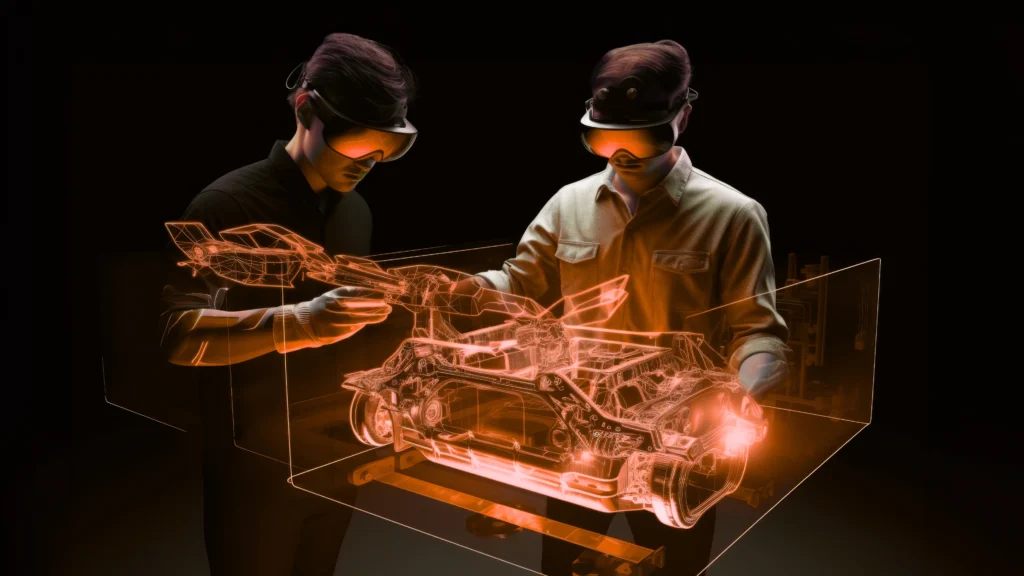
This transformation is both cultural and architectural. Vehicles are evolving into Software-Defined Vehicles (SDVs), where functionalities are no longer static but continuously updatable over time.
Over-the-air (OTA) updates enhance performance, safety, and services without physical intervention. Each vehicle is paired with a digital twin in the cloud, capable of simulating behavior and wear, optimizing maintenance and lifecycle management.
Software is no longer a secondary component—it is the core element defining vehicle identity and reliability.
This evolution introduces a new dimension of safety: proactive, predictive, and algorithm-driven, aligned with the European vision of “zero road fatalities.” The ability to balance human unpredictability with automated decision-making becomes a key factor in road safety.
Smart Roads: when infrastructure becomes intelligent
As vehicles evolve, so does infrastructure.
Roads, bridges, and viaducts are becoming active digital platforms, equipped with IoT sensors, Edge nodes, and real-time monitoring systems. No longer passive surfaces, they are now connected entities capable of interacting with vehicles, detecting environmental conditions, and optimizing traffic flows.
Italtel has long explored this vision—anticipating today’s priorities in the modernization of transport networks. What was once a forward-looking scenario is now a strategic necessity: transforming existing mission-critical infrastructures into intelligent systems.
Edge Computing and 5G: Intelligence at the Network Edge
The real technological breakthrough lies in the distribution of data processing capabilities.
With Edge Computing, a significant portion of data generated by vehicles and sensors is processed closer to the source, reducing latency and enabling real-time responsiveness for autonomous driving and dynamic traffic management.
5G networks—including private 5G deployments for critical environments— act as key enablers of this architecture, supporting:
- Ultra-reliable communications
- Massive IoT device connectivity
- Network slicing for mission-critical services
European initiatives such as AI@EDGE, involving Italtel, demonstrate how distributed artificial intelligence is essential for integrating safety, energy efficiency, and operational resilience.
Cybersecurity and OT: protecting Cyber-Physical systems
As vehicles and infrastructures become network nodes, security takes on a new dimension.
It is no longer just about protecting data—it is about safeguarding cyber-physical systems that directly impact human safety. Smart traffic lights, variable message signs, structural sensors, and control centers all fall within the scope of critical infrastructure.
The convergence between IT security and Operational Technology (OT) cybersecurity is therefore essential. Key pillars include:
- Continuous monitoring
- Segmentation of critical functions
- Secure communications
A concrete example is the IRIS project, presented at Mobile World Congress 2025, with the involvement of Italtel. IRIS develops an integrated smart urban security model, combining distributed sensors, AI, and centralized management platforms to protect public spaces and critical infrastructures.
This approach can be directly applied to mobility systems, ensuring proactive security for both vehicles and urban networks.
Italtel’s role: orchestrating complexity
The real challenge of future mobility is not a single technology, but the reliable orchestration of a complex ecosystem—a prerequisite for more efficient, safer, and sustainable cities.
In this context, Italtel acts as a technology orchestrator for integrated and sustainable mobility, bridging the gap between physical infrastructure and the digital world.
Its evolution from a telecommunications leader to a multi-technology system integrator enables the company to operate at the convergence of:
- 5G connectivity
- Cloud-native architectures
- Edge Computing
- Artificial Intelligence
- Cybersecurity
Participation in European programs such as Horizon 2020 and national initiatives like RESTART has strengthened its expertise in designing distributed and resilient ecosystems.
From private 5G networks for critical environments to Mobility-as-a-Service (MaaS) platforms, Italtel contributes to building the “nervous system” that connects vehicles, infrastructure, and cities.
The architecture of future mobility
The future of mobility will not be defined solely by electrification or autonomous driving.
The real challenge is architectural: designing a digital infrastructure capable of integrating heterogeneous components, processing data in real time, and ensuring resilience and security.
Innovation lies not only in the vehicle, but in the invisible network that orchestrates its movement.
It is within this complex, distributed, and mission-critical network that the transformation of smart cities and next-generation infrastructure will take shape.
TECH KEYWORDS
SMART MOBILITY
5G PRIVATE NETWORKS
EDGE COMPUTING
SOFTWARE-DEFINED VEHICLE
SHARE THE PAGE