


INTERVIEW
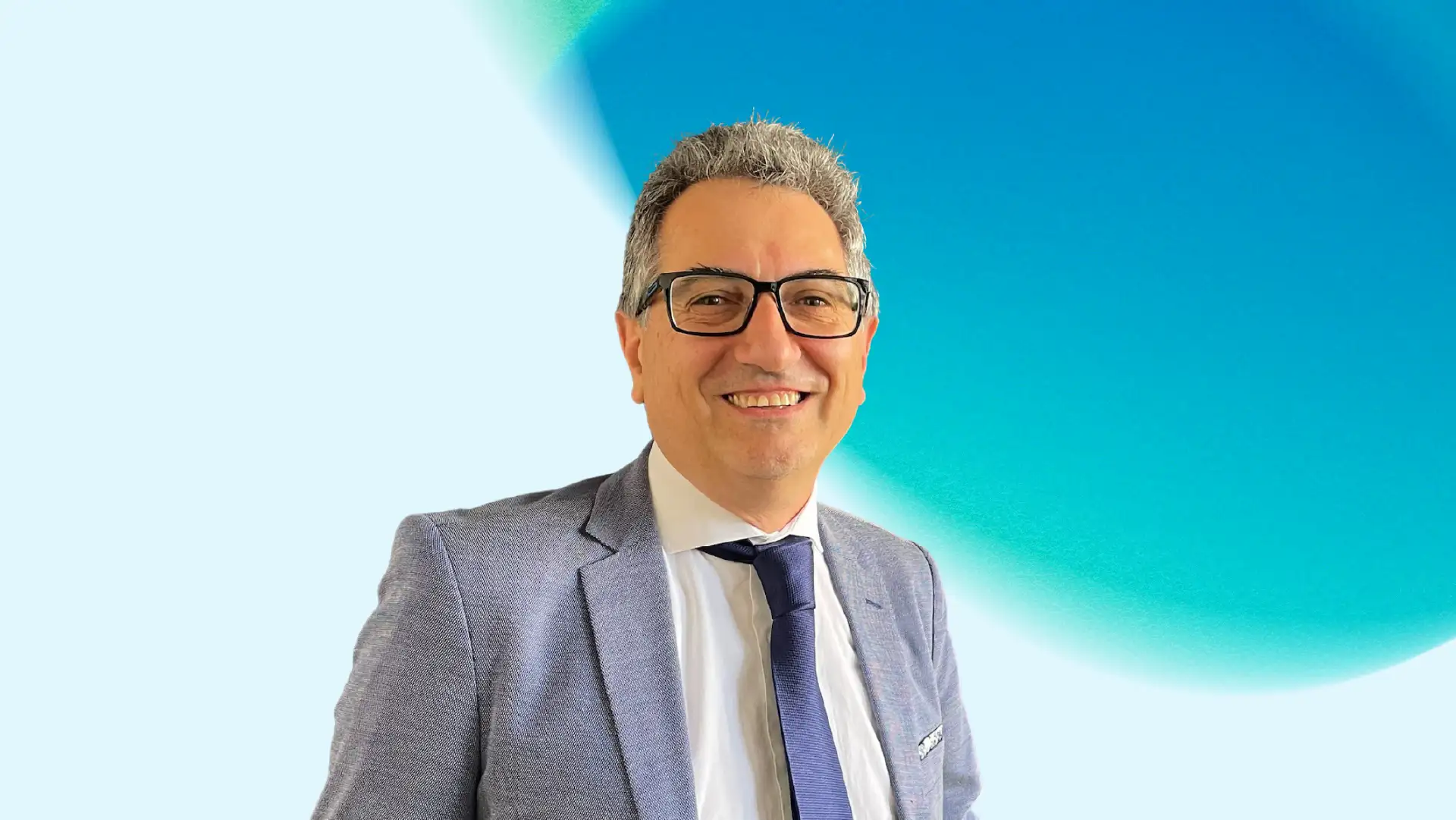
Growing together with technology: Virgilio Puglia’s journey at Italtel
A choice that shaped a career path
Virgilio Puglia’s professional story is closely intertwined with the evolution of telecommunications in Italy. His journey has been marked by innovation, technological challenges, and continuous growth, where technical expertise and interpersonal skills have carried equal weight.
After earning a degree in Electronic Engineering in Florence (Italy), Virgilio began his career as an IT teacher. Although brief, this experience proved formative, allowing him to refine his communication skills. He later joined a fashion company as a Technical Support Engineer, working in a dynamic and stimulating international environment. However, he soon felt the need to pursue a career more aligned with his academic background.
The turning point came when he received two job offers at the same time: one from Siemens, to work on SAP in Rome, and one from Italtel, already a leading company in technological innovation within the telecom sector. He chose Italtel. It was 1997.
He initially joined the GSM department, but soon moved to Central Research, where new technologies were tested and experimented with. The environment resembled today’s start-ups in both mindset and ways of working: innovation-driven, with development largely carried out in-house and with a strong reliance on individual contributions.
The years of technological transformation
Virgilio’s career grew alongside the industry. Between the late 1990s and early 2000s, the liberalization of the telecommunications market in Italy led to the rise of alternative operators (OLOs). During this period, he worked on the design of voice and data networks, as Italtel began significant collaborations with these new players.
For one of these clients, Virgilio became a key point of reference, leading the design of a Cisco-based network with ambitious goals. The infrastructure had to be faster than that of the incumbent operator, while also being more cost-efficient. It was a period of strong growth, as operators transitioned from start-up phase to consolidation, building nationwide IP backbones. This transformation required not only vision but also the courage to innovate, with experiments often carried out directly in the field.
Virgilio was involved in one of the first projects in Italy to implement SS7 signaling over IP networks and became one of the leading experts in DWDM transport technologies. At the same time, as projects evolved and complexity increased, new organizational needs emerged. Teams that were initially informal and agile required more structured frameworks.
From technical expertise to leadership
Thanks to his technical skills and interpersonal abilities, Virgilio took on the role of Technical Project Manager, leading a team of five people and embarking on managerial training paths. This marked the beginning of a new phase in his professional career.
Among the most challenging experiences he recalls is the integration project between two major operators following a corporate merger. The goal was to unify national networks without traffic loss—an extremely complex task requiring continuous cycles of study, testing, and implementation. It was a multidisciplinary project in which Italtel’s system integration expertise was successfully put to the test, generating great satisfaction for the entire team.
Knowledge sharing and role perspective
His career also includes international experience, such as a network project in Libya in 2005. Although not fully completed, it represented an important opportunity for professional growth. During those years, Virgilio also contributed to the dissemination of technical knowledge by writing articles on DWDM, VoIP, and energy, which were published by international organizations and later referenced by the scientific community. He attributes this achievement to the stimulating cultural and technological environment at Italtel.
Today, in his role within Project Management, he considers not only hard skills but also soft skills to be essential: listening, mediation, versatility, and a solid understanding of the economic impact of projects.
Over time, he has been recognized by all his managers for his ability to handle complex situations and find innovative solutions, even in the most critical moments.
Looking to the future: AI and new ways of working
Looking ahead, Virgilio identifies Artificial Intelligence as the most transformative technology. Unlike other innovations once considered disruptive, he believes AI will have a deep and pervasive impact. While acknowledging that some tasks may be automated, he is convinced that the role of the Project Manager will remain central – especially in managing complex processes where the human factor adds significant value.
The ability to truly understand client needs and co-create effective solutions represents the real distinguishing value of a Project Manager: a human and relational contribution that, as of today, cannot be replaced by AI.
Virgilio was also one of the first people at the company to try smart working, participating in the pilot project around 2016. He recalls with a smile the initial skepticism of colleagues. Today, this working model is widely adopted and appreciated, both within and outside the company, particularly for the improved work-life balance it enables. However, Virgilio emphasizes the importance of office presence to strengthen relationships and team spirit: a 50% smart working model, like the one adopted by Italtel, represents a good balance.
To young people considering a career at Italtel, he recommends seizing the opportunity: working in a high-tech, multi-vendor, and constantly evolving environment, that spans networking to cybersecurity, and form the cloud to autonomous networks. A collaborative setting where the exchange between senior expertise and new energy fosters growth, innovation, and open-mindedness.
TECH KEYWORDS
INNOVATION
TECHNOLOGICAL CHALLENGES
CONTINUOUS PERSONAL GROWTH
PROGRAM MANAGEMENT
CONDIVIDI LA NEWS