


FOCUS
Technology and Disability: building inclusive environments for everyone
The International Day of Persons with Disabilities invites us to reflect on the relationship between people and the environment around them. Disability is not simply an individual characteristic, but the result of a context that can either enable or hinder participation. In this sense, anyone can experience some form of disability at any moment in life — all it takes is an environment that is not adequately designed.
Today, that environment is not only physical: it is technological. Technology shapes the invisible ecosystem we live in — our homes, workplaces, schools, transport systems and public services are permeated by digital systems that shape our possibilities for action.
Inclusive technology or digital barriers
When designed with care, technology can become a powerful tool for autonomy, communication and learning. Intuitive interfaces, adaptive systems and assistive tools can all contribute to making everyday life more accessible.
But without proper attention to accessibility, technology can easily become a barrier. Digital systems conceived without considering human diversity may exclude individuals with different needs, limiting their participation and independence.
Responsible innovation: a strategic obligation
Innovation can no longer treat accessibility as optional — it must be an integral part of the design process from the outset.
This is not only an ethical commitment — although ethics matter — but also a concrete competitive advantage. International data shows that inclusive solutions not only improve the user experience, but also open wider markets, increase adoption and reduce adaptation costs.
In market terms, the purchasing power of people with disabilities and their families is enormous. Recent estimates indicate over 1.6 billion people with disabilities worldwide, generating a global market exceeding one trillion dollars in spending. Designing inclusive products and services therefore opens significant business opportunities.
Beyond visible disabilities
Challenges do not concern only those with physical disabilities. Projections from multiple sources indicate that by 2027, one in four Fortune 500 companies will invest in the inclusion and development of neurodivergent talent, such as autistic individuals or people with ADHD or dyslexia. These are skills that can drive analytical and creative innovation, provided that organizations create environments capable of valuing diversity and supporting inclusion.
At the same time, the risk of exclusion increases for those with limited digital skills, flexible work arrangements, or poorly recognized conditions. To address this complexity, collaboration among businesses, schools, associations and local networks is essential to build truly inclusive workplaces.
Italtel’s commitment
At Italtel, we believe technology should connect, not separate. For this reason, we work not only to create accessible digital solutions, but also to build the infrastructures that make tomorrow’s inclusive applications and services possible. Our vision is that of a digital environment welcoming diversity at every level: high-capacity connectivity networks, secure and intelligent platforms, and systems that guarantee continuity, quality and reliability.
These infrastructures are the key enabler for an ecosystem of increasingly advanced assistive technologies: from smart glasses that support mobility and orientation, to text-to-speech systems and screen readers, to augmentative communication devices for people with verbal difficulties. New AI-based solutions — such as cognitive assistants, automatic transcription tools, natural language processing systems or decision-support applications — can significantly enhance people’s autonomy, but they require solid digital infrastructures, reliable connectivity and high-performance platforms.
For this reason, the design of our networks and platforms is inspired by a human-centred vision, where digital accessibility plays a crucial role. Our goal is to make technology a space truly usable by everyone, enabling tools that improve daily life and transforming innovation into an inclusive, sustainable and livable environment.
Towards a more inclusive future
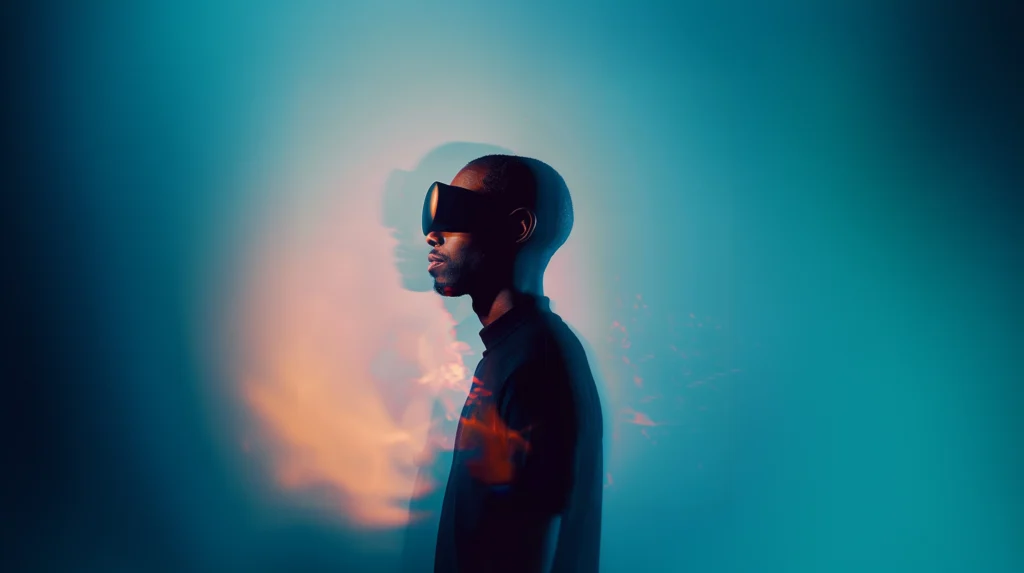
If we truly live immersed in technology — like fish in water — then we have both the responsibility and the opportunity to make it a place where everyone can swim freely.
Building inclusive technological environments does not only mean removing barriers; it means generating shared value and turning innovation into a driver of participation and progress.
TECH KEYWORDS
DIGITAL ACCESSIBILITY
DISABILITY & TECHNOLOGY
DIGITAL INFRASTRUCTURE
AI & INCLUSION
TECHNOLOGY EMPOWERMENT
SHARE THE PAGE