



FOCUS
Technology, skills and processes: the three pillars of a SOC protecting your business 24/7
Tangible benefits for organizations: prevention, attack containment and effective cyber incident management.
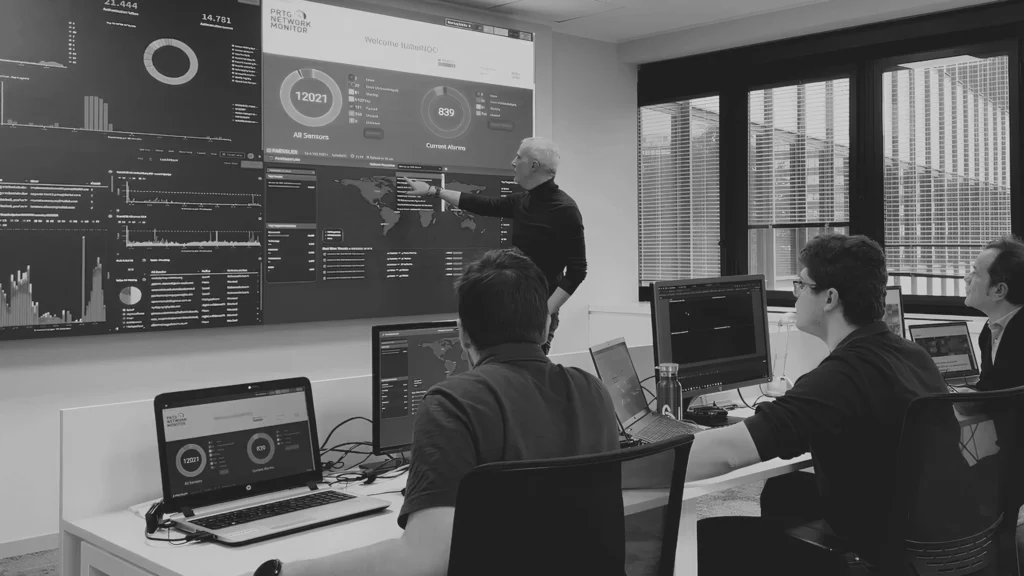
Relying on a Security Operations Center (SOC) means having cybersecurity experts working around the clock to protect the organization through prevention, containment and rapid incident response. A SOC is the operational heart of cybersecurity: it continuously monitors corporate networks, detects threats in real time and coordinates targeted actions to minimize risk and business impact.
To address internal skills shortages and ensure continuous monitoring, an increasing number of organizations choose managed SOC services, often provided by specialized external partners such as Italtel.
To operate effectively, a SOC must be built on three essential pillars: technology, specialized skills and well-defined processes. The quality and balance of these elements determine how quickly an organization can respond and how effectively it can reduce the impact of cyberattacks.
Technology: detect, correlate and respond quickly
Technology is the first key enabler. Tools such as SIEM (Security Information and Event Management), XDR (Extended Detection and Response) and Email Protection systems make it possible to collect and correlate massive volumes of events, identifying those that are truly suspicious.
A crucial role is played by SOAR architectures (Security Orchestration, Automation and Response), which automate repetitive tasks and enable responses within seconds.
Speed is critical: anticipating an attacker’s next move can prevent large-scale infections.
Artificial intelligence also provides valuable support, but always under the supervision of human analysts, who remain essential for understanding context and making informed decisions.
Skills: analyzing Millions of events and making accurate decisions
The second pillar is people—the true value of any SOC. Analysts must correctly interpret alerts generated by monitoring tools, which in a typical organization can amount to millions of events per day, most of them harmless.
The analyst’s expertise does not lie in manually managing events, but in defining, refining and interpreting correlation mechanisms that isolate meaningful alerts and reduce false positives. For example, two failed login attempts may be a user error, while repeated failures within minutes indicate a brute-force attack requiring immediate action.
In this model, first-level filtering is handled by technology, while analysts focus on evaluating high-impact alerts and conducting Threat Hunting to identify threats that automated systems have not yet detected.
Skills become even more critical once an attack has succeeded. In such cases, the SOC must quickly apply targeted containment measures, avoiding drastic actions that could unnecessarily disrupt business operations.
Through Incident Response and Digital Forensics, the SOC can rapidly assess the severity of an incident, guide immediate corrective actions and determine whether notification to the national cybersecurity authority (as required by NIS2) is necessary—distinguishing negligible impacts from real breaches affecting data confidentiality or availability.
In short, even with advanced tools, SOC analysts’ expertise makes the real difference in protecting the organization.
Processes: standardizing response and ensuring continuity
The third pillar consists of organizational processes. A SOC operates much like an emergency room: it cannot rely on improvisation. Runbooks and playbooks are required—standardized procedures that define step by step how to respond to each attack scenario.
These procedures are supported by:
-
technical and managerial escalation matrices,
-
communication protocols for customers and stakeholders,
-
structured on-call availability of specialists,
-
uniform incident classification criteria.
Even in unforeseen scenarios, analysts must be able to react using experience, judgment and expertise. The goal is to replace impulsive reactions—such as “shutting everything down”—with controlled, coordinated and targeted actions that protect business continuity without halting operations.
The role of the SOC in corporate defense
An effective SOC is built on the balanced integration of advanced tools, specialized skills and structured processes. Only this combination enables organizations to ensure continuous, responsive and standards-compliant cybersecurity defense.
Adopting managed SOC services can significantly accelerate the protection of corporate networks and critical infrastructure.
TECH KEYWORDS
CYBERSECURITY
NETWORK CENTRIC SECURITY STRATEGY
SOC CAPABILITIES
NIS2 COMPLIANCE
SHARE THE PAGE