



NEWS
27.07.2026
Reverse Mentoring: innovation grows through dialogue between generations
An interview with Italtel’s People Development Manager featured in Italy’s leading digital tech media
Italtel’s commitment to continuous learning, knowledge sharing and innovation has been featured in CorCom, one of Italy’s leading digital publications covering technology, telecommunications and digital transformation.
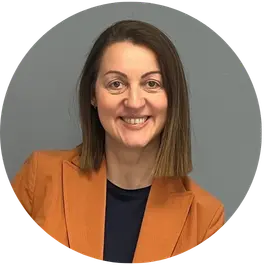
In the interview, Federica Bolognesi, People Development Manager at Italtel, explains how the company’s Reverse Mentoring pilot project is helping bridge generations, strengthen corporate culture and accelerate innovation by encouraging mutual learning between junior and senior colleagues.
Reverse Mentoring: when dialogue between generations drives innovation
As working lives become longer, new generations enter the workforce and Artificial Intelligence reshapes how skills are developed, companies are rethinking how knowledge is shared. At Italtel, one response to this challenge has been a Reverse Mentoring pilot launched within the Global Software Hub, the business unit dedicated to software products and telecom engineering services.
For three months, seven junior-senior pairs met regularly, choosing independently when, where and what to discuss. According to Federica Bolognesi, People Development Manager at Italtel, the initiative demonstrates how reciprocal learning can become a powerful driver of innovation and cultural change.
Why did the project start in the Global Software Hub?
“Our approach to learning and development has always been skills-based. We focus on reskilling and upskilling to anticipate both business and people’s needs.
The project originated from the convergence of two major trends.
The first is professional longevity. As careers become longer, it is increasingly important to continue investing in skills development throughout people’s working lives while preserving the experience and expertise built over decades.
The second is the impact of Artificial Intelligence on learning. Traditionally, junior professionals gained experience by performing repetitive operational tasks that gradually built their capabilities. As AI increasingly automates these activities, we need to rethink how future professionals will develop their expertise.
Connecting junior and senior colleagues allows experience to flow in one direction while new tools and fresh perspectives flow in the other. We selected the Global Software Hub because it is a highly technical environment where many young professionals have joined the company in recent years, making it the ideal setting to test this model.”
How were the mentoring pairs created?
“The participants came from all our locations and represented different backgrounds and genders. Our main rule was to pair colleagues who knew each other little—or not at all—and who were preferably working on different projects.
We also considered personal characteristics. Since technical teams often include more reserved personalities, we tried to balance each pair by matching more outgoing colleagues with those who were naturally quieter.
The programme was intentionally designed with minimal structure. We established the overall framework but left participants free to shape their own journey. Trust develops more naturally when people can adapt conversations to their real needs.”
How did the meetings work?
“The programme lasted three months. Each pair met three times per month for sessions lasting between 30 and 50 minutes.
Some preferred formal meetings, while others chose lunch breaks, coffee chats or shared journeys.
Rather than assigning discussion topics, we encouraged participants to begin by sharing their personal stories, professional experiences and perspectives on the company.
As the conversations evolved, each pair explored different themes. Some focused on projects, digital tools and Artificial Intelligence applications. Others discussed leadership, collaboration, meetings, relationships with managers, negotiation, conflict management and work-life balance.
Towards the end of the programme, several pairs launched small experiments that generated immediately applicable ideas or new working methods.”
What were the main outcomes?
“The first important finding was that generational differences were not a barrier.
Initial uncertainty quickly gave way to open conversations, confirming one of the project’s core assumptions: being senior does not simply mean having something to teach, and being junior does not simply mean having something to learn.
Senior colleagues discovered new technologies and innovative ways of working, while younger employees gained access to valuable experience and a deeper understanding of the organisation.
Perhaps even more importantly, new professional relationships emerged. Some participants described genuine friendships, while others found trusted mentors within the company. Several mentoring pairs have even decided to continue meeting beyond the official end of the pilot—a strong indicator of the programme’s value.”
How can Reverse Mentoring accelerate innovation?
“Innovation spreads faster when people trust one another and openly share what they have learned.
During the programme, junior colleagues introduced senior employees to new digital tools. Once these tools proved effective, they were adopted by wider teams.
This creates a practical cycle: a solution is tested, demonstrates measurable value and then naturally spreads across the organisation.
Reverse Mentoring accelerates this process by connecting complementary skills and diverse perspectives.“
What impact can it have on corporate culture?
“One of our goals was to preserve some of Italtel’s strongest values: collaboration, openness and mutual support.
Young professionals often join the company with up-to-date technical skills, but many professional attitudes and behaviours can only be learned by working alongside experienced colleagues.
Reverse Mentoring enables us to transfer our corporate culture through experience while also enriching it with the perspectives of new generations.”
Will the initiative be expanded?
“Yes. Our intention is to extend the programme to all young professionals across the company.
The pilot clearly demonstrated that investing time in dialogue strengthens collaboration, learning, employee engagement and innovation.
As we scale the initiative, we want to preserve the flexibility that made the pilot successful while ensuring strong managerial support across the organisation.”
How does Marisa Bellisario’s legacy inspire this initiative?
“Her legacy remains deeply rooted in Italtel.
Many of the values she helped establish continue to define who we are today. As experienced colleagues retire, there is a risk that invaluable knowledge and behaviours could be lost.
Bellisario always considered learning a strategic investment, especially during periods of change. That principle continues to guide our investment in people development and technical skills.
Reverse Mentoring follows the same philosophy: preserving our heritage while combining it with emerging competencies to build the future.
We have also started introducing newly hired colleagues to Marisa Bellisario’s story, helping them understand why her legacy remains such an important part of Italtel’s identity.”
Read the full interview
Discover the complete interview (available in Italian) published by CorCom and learn how Reverse Mentoring is helping Italtel foster innovation, continuous learning and collaboration across generations.
KEYWORDS
REVERSE MENTORING
ARTIFICIAL INTELLIGENCE
PEOPLE DEVELOPMENT
LEARNING CULTURE
KNOWLEDGE SHARING
SHARE THE PAGE