




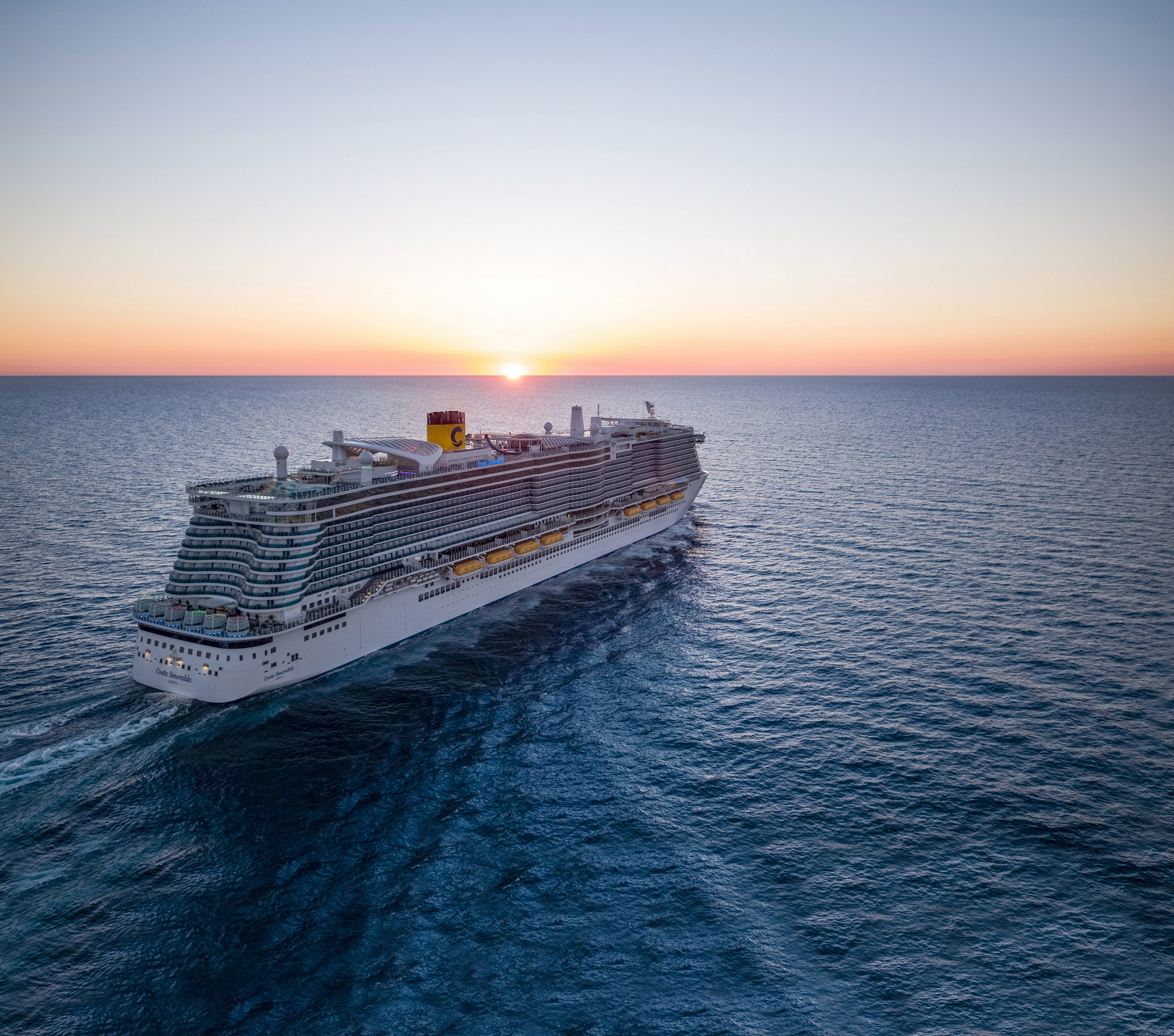
CASE STUDY | ENERGY, UTILITIES & TRANSPORTATION
How Italtel technology enhanced port communications for Costa Crociere
Seamless, reliable connectivity between ship and port: optimizing time, efficiency, and passenger management through advanced wireless solutions
Challenge
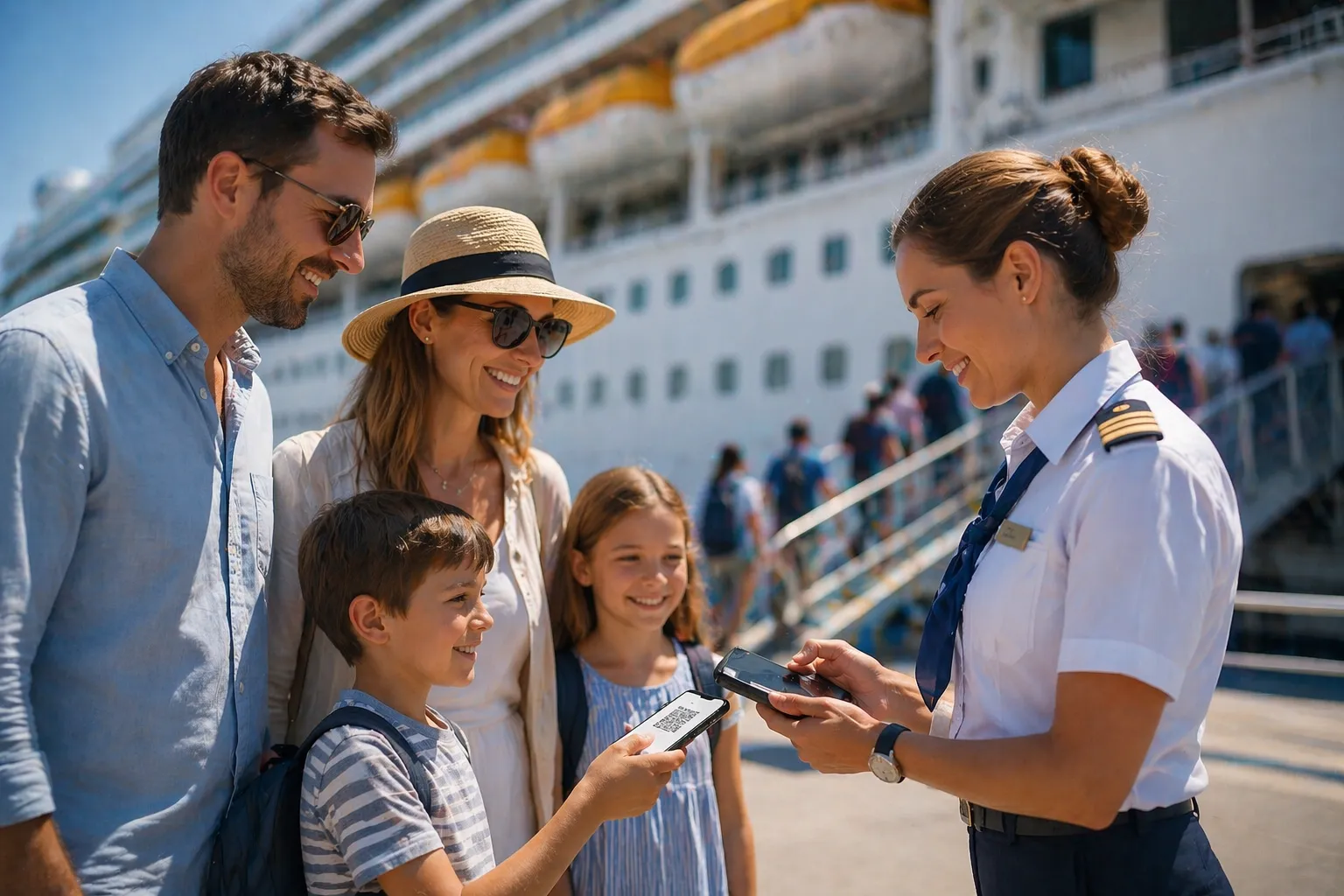
For a global cruise operator like Costa Crociere, managing several vessels and thousands of passengers embarking every week, each port call represents a highly complex logistical challenge. This applies both to cargo provisioning and to passenger check-in and embarkation operations.
Port activities require efficient coordination across large and distributed port areas including quays, offices, and terminal buildings. In such a critical environment, any network disruption or performance issue can have a significant impact on operations.
Traditional solutions—such as wired networks or standard Wi-Fi—often prove inadequate. The distance between the berthed vessel and onshore offices, the need to cover wide areas, and the mobility of operations make it extremely difficult to guarantee secure, stable, low‑latency connectivity, especially in difficult weather conditions or in challenging ports.
Mobile 4G/5G routers with VPN connections have been tested, but with disappointing results. High latency, in particular, severely limits the usability of onboard management systems—essential for passenger check‑in.
For these reasons, Costa Crociere decided to adopt an innovative networking solution capable of ensuring continuous, reliable, and high‑performance connectivity, even in challenging port conditions.
Solution
To provide stable, high-speed connectivity between ship and shore, rugged, heavy-duty wireless Cisco Ultra Reliable Wireless Backhaul solution was selected—designed specifically for marine and harsh environments. The system is resistant to humidity and salt spray, tolerant of extreme temperatures, and capable of delivering high-throughput radio connections over long distances.
The solution creates a point-to-point / mesh wireless network that acts as a secure bridge between the ship’s onboard network and onshore terminals. This enables mobile devices used for passenger check-in and embarkation to operate within a single, integrated network environment.
From the end-user perspective—whether embarkation staff, logistics teams, or provisioning personnel—the benefit is immediate: no complex cabling, no unreliable mobile routers. Devices simply connect to the same network used onboard, ensuring a smooth and consistent operational experience.
Benefits
Why did this solution make a difference?
- Speed and operational agility
Cargo provisioning, document checks, passenger check-in operationsare are fast thanks to a network that is always available and responsive - Reliability in real-world conditions
The point-to-point/mesh wireless network is designed to withstand harsh port environments—humidity, salt exposure, and vessel movement—without service interruptions or performance degradation - Higher efficiency and fewer errors
Direct integration with the ship’s management systems allows staff to use the same tools onshore as onboard, reducing errors, streamlining workflows, and ensuring data consistency - Flexibility and scalability
As port layouts or operational areas change (warehouses, terminals, offices), new mesh points can be added easily, without disrupting ongoing activities - Reduced costs and downtime
No complex cabling, no manual configuration of mobile routers, no unstable connections—resulting in fewer delays, less wasted time, and increased overall productivity.
In short, Italtel and Cisco technology enabled Costa Crociere to transform the port quay into a “virtual extension” of the ship, making cargo and passenger embarkation processes smoother, safer, and significantly more efficient.
The role of Italtel
Italtel designed and delivered a dedicated wireless network based on point-to-point and mesh radio technology, creating a robust and direct connection between the vessel and the port’s quay and office areas. The solution has been fully engineered by Italtel team, in order to fit Costa Crociere’s needs.
- A “mesh end” access point is installed onboard the ship.
- A second “mesh point” access point is deployed on the quay or within port facilities.
- Terminals used by staff (hostesses, embarkation operators, technical teams) connect to the shore access point as if they were directly connected to the ship’s onboard network.
- As a result, both cargo management systems (warehousing, customs documentation, health inspections) and passenger check-in systems (biometric data, boarding cards, cabin assignment) operate seamlessly—without the need for cabling or unstable mobile connections.
Italtel managed the entire process: from network design and the selection of equipment suitable for harsh port environments, to deployment and testing. The outcome is a scalable, reliable infrastructure built to perform consistently in real port conditions.
After the first deploy for Costa full fleet – 9 vessels – Italtel is now supporting Costa in engineering an innovative transport kit for use by on-board personnel, to further speed up operations at the terminal.
TECH KEYWORDS
WIRELESS BACKHAUL
NETWORK RESILIENCE
LOW-LATENCY NETWORK
POINT-TO-POINT MESH
INDUSTRIAL OUTDOOR WI-FI
SHARE THE PAGE